Galeries Lafayette Haussmann: History, Dome and Visit
Key Takeaways
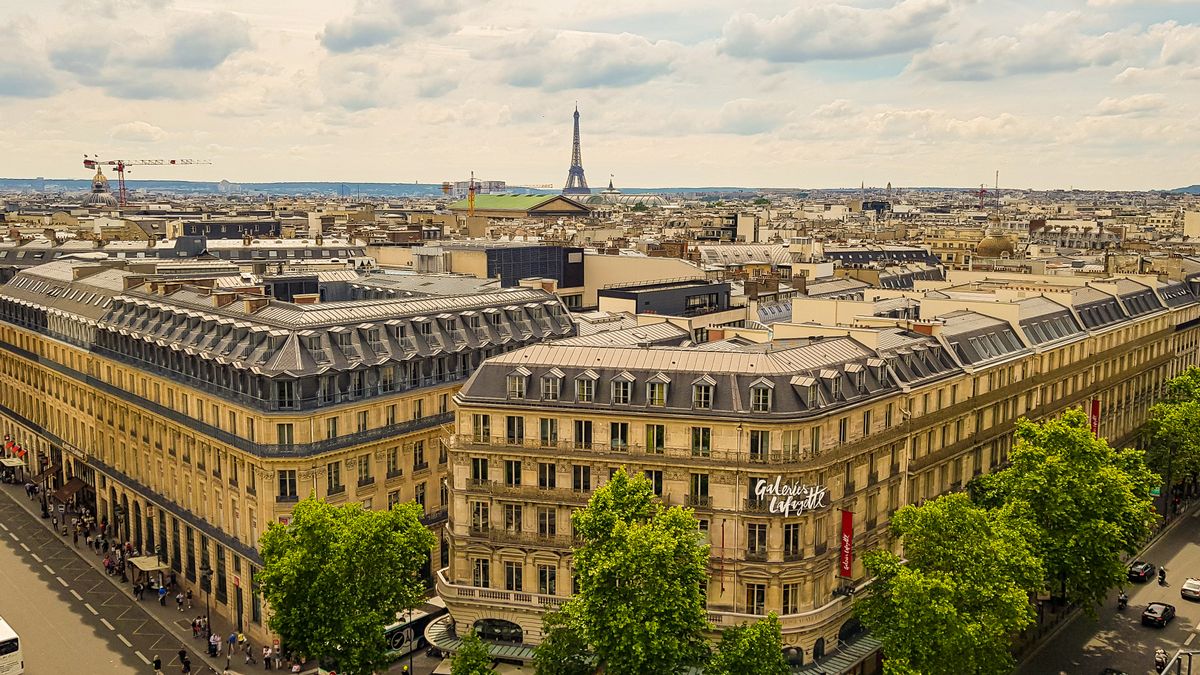
Founded in 1893 by Théophile Bader and Alphonse Kahn, Galeries Lafayette owes its fame to its Art Nouveau dome, unveiled in 1912 on Boulevard Haussmann. Entry to the store is free, and so is the panoramic rooftop terrace, with views over the Opéra Garnier and the Eiffel Tower. Allow about an hour to admire the glass dome, head up to the roof and browse the floors.
Behind the facade on Boulevard Haussmann lies far more than a shopping temple: over a century of history and one of the most beautiful Art Nouveau interiors in Paris. Here is how a small shop became a true Parisian institution, and how to visit it.
Table of Contents
1. The History of Galeries Lafayette, from Haberdashery to Department Store
From a small novelty shop in 1893 to the giant of Boulevard Haussmann, the story of Galeries Lafayette mirrors that of Paris and its grand boulevards. Here are the key milestones that turned this store into an essential Parisian landmark.
1893: From a 70 m² Haberdashery to a Novelty Store
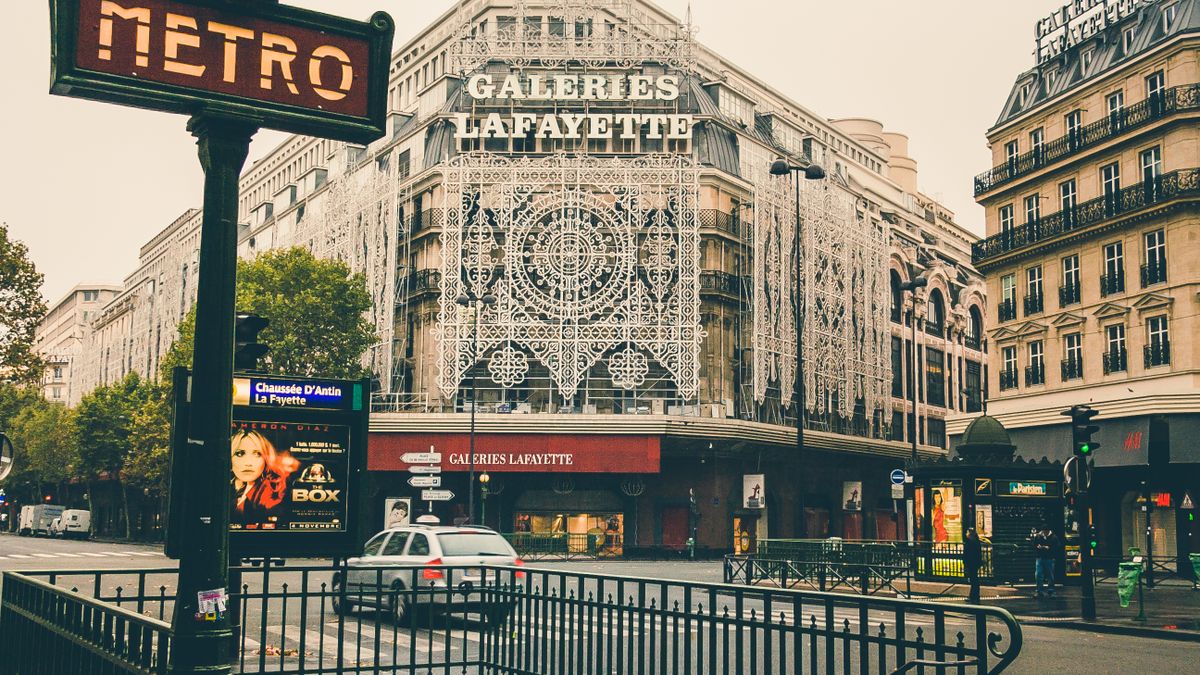
It all began in 1893, according to the history told by the store itself, when two cousins from Alsace, Théophile Bader and Alphonse Kahn, opened a novelty shop in a 70 m² haberdashery on the corner of Rue La Fayette and Rue de la Chaussée d'Antin. Their bet: offering a wide choice of fashion and accessories at affordable prices, all under one roof.
Success came quickly. In 1896, the founders bought the building at 1 Rue La Fayette, then, in 1903, several buildings on Boulevard Haussmann and Rue de la Chaussée d'Antin. Riding the rise of the grand boulevards, they now dreamed of a spectacular venue, worthy of the capital's energy.
1912: The Store Opens Beneath Its Dome
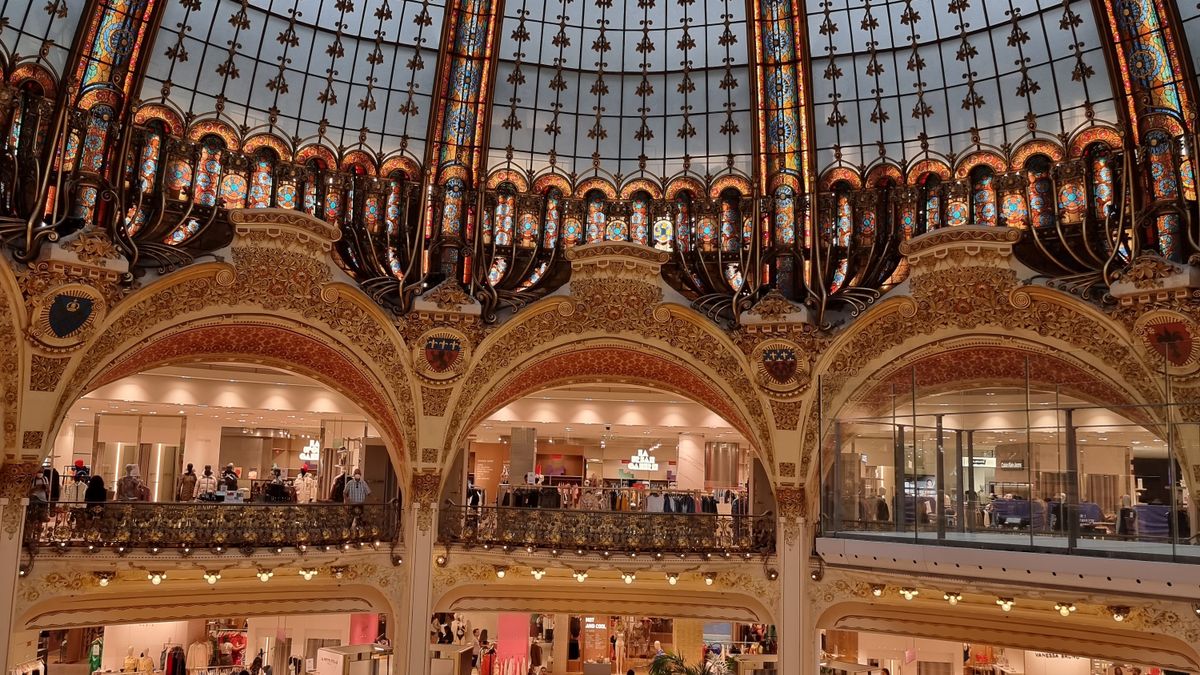
The turning point came in 1912, when the store opened beneath its famous dome. Under the direction of architect Ferdinand Chanut, the retail space doubled, and the glass dome, with neo-Byzantine stained glass by master glassmaker Jacques Gruber, rose more than thirty meters high.
Chanut brought in artists from the École de Nancy to create this showcase: majestic staircases, ornate balconies and elegant ironwork all play a part in a setting designed to dazzle. The department store became a true cathedral of commerce, where people came as much to look as to shop.
A Major Player in Fashion and Novelty
From the very first decades, the store loved to make headlines: in 1919, aviator Jules Védrines landed his plane on the store's rooftop, earning himself a fine for flying too low. This anecdote alone sums up the daring spirit of a place that already saw itself as a Parisian spectacle.
The store then kept pace with changing fashion: in 1951, it unveiled an escalator billed as the tallest in Europe, in 1980 it launched the Festival de la Mode, and in 1984 it opened a department dedicated to designers. All these initiatives rooted Galeries Lafayette firmly in the daily lives and imagination of Parisians.
2. The Dome, an Art Nouveau Gem on Boulevard Haussmann
Look up: the dome alone captures the full charm of Galeries Lafayette. Here is what makes it unique, how it survived the war and why it underwent a major restoration in recent years.
A Neo-Byzantine Masterpiece by Gruber and Majorelle
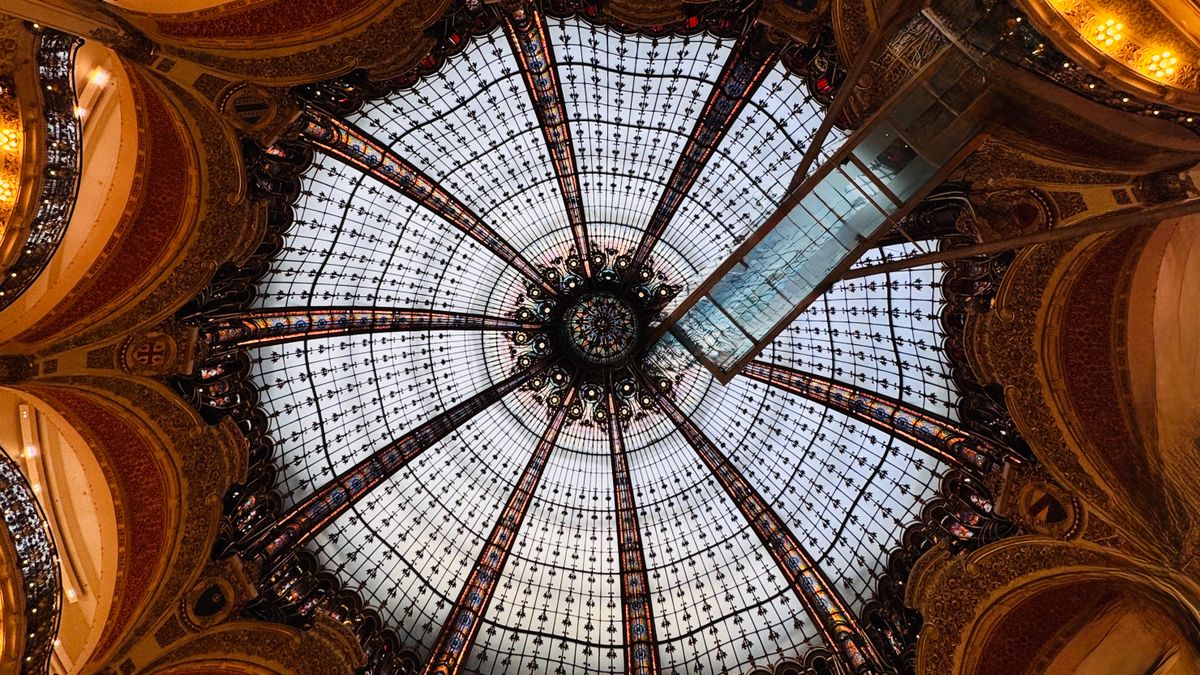
Beneath the glass roof, the stained glass forms a vast ten-petal flower covering 1,000 m². Blending Art Nouveau style with neo-Byzantine inspiration, the dome filters daylight over the floors below and gives the central hall the feel of a cathedral nave. Here is what to look out for first:
- Jacques Gruber's stained glass: a colorful glass dome at the heart of the setting.
- Louis Majorelle's gilded balconies: fine wrought ironwork created with Edouard Schenck.
- The rooftop terrace: one last vantage point over the dome and over Paris.
Take your time and turn slowly on the spot in the middle of the hall to take it all in. This view, the most spectacular in the store, is best enjoyed outside peak hours, when the crowds give way to contemplation. Then look up at the gilded balconies to appreciate the finesse of every detail.
A Dome Dismantled During the War, Restored in 2020 and 2021
During the Second World War, the dome was dismantled to prevent it from shattering in a bombing raid and to protect shoppers from falling glass. Not all of the original stained glass could be recovered: the missing pieces were replaced with plain white panes.
The restoration carried out by the Maison du Vitrail put this right. The first phase, devoted to the stained glass and the replacement of the white panes, was completed in October 2020, and the second, covering the glass roof, in April 2021, with the work carried out at night.
The Architects and the Building's Major Transformations
The building you see today is the work of many hands and numerous renovation campaigns, from Georges Chedanne's first designs to Pierre Patout's Art Deco makeover, including the extra storeys added in the 1950s. Each era left its mark, on the facades as well as inside. Here are the key dates to remember:
- 1907: first major works on Boulevard Haussmann by Georges Chedanne.
- 1912: the retail space doubles and the store opens beneath the dome, under the direction of Ferdinand Chanut.
- 1932: Art Deco redesign by Pierre Patout, with bow windows by René Lalique.
- 1957-1959: two storeys are added to the building.
- 1974: the grand central staircase is removed.
- 2004: the former Marks and Spencer store becomes Lafayette Maison.
This succession of eras explains the unique charm of the place, where the Art Nouveau dome sits alongside Art Deco facades and more contemporary interiors on the upper floors. Take time to notice these successive layers, from the main hall to the upper levels, and let the contrasts between the eras surprise you.
3. Visiting Galeries Lafayette Haussmann: Practical Tips
Visiting Galeries Lafayette requires no preparation, but a few pointers make the visit easier: where the store is, when to go, how to reach the rooftop terrace and how to keep exploring the neighborhood.
Practical Information at a Glance
The flagship store is located at 40 Boulevard Haussmann, in the 9th arrondissement, in a neighborhood with excellent public transport links. The table below gathers the useful information before you set off, whether you are coming for the dome, the terrace or a spot of shopping.
These opening hours, taken from the Visit Paris Region tourist office, may vary throughout the year: check them before your visit. To fit this stop into a longer stay, our 2-day Paris itinerary helps you link your visits without rushing.
The Panoramic Terrace and the Christmas Windows
Head up to the panoramic rooftop terrace: access is free and the view takes in the Opéra Garnier, the Eiffel Tower and the Sacré-Cœur. It is one of the finest viewpoints in central Paris, with no admission fee, and the perfect way to end your visit with a break above the rooftops.
At the end of the year, the store is transformed: the giant Christmas tree returns beneath the dome and the Boulevard Haussmann windows, free to admire, draw families from all over. Come on a weekday morning if you can, when it is usually less crowded, then carry on with our guide to the must-sees of Paris.
Galeries Lafayette by 2CV with Paris Paname Tours
To keep exploring the area, Paris Paname Tours offers rides through Paris aboard a Citroën 2CV, with a driver-guide who shares the history of every place you pass. The Iconic Paris tour takes travelers past the capital's great monuments, in a car that has itself become a symbol of Paris.
After your visit to Galeries Lafayette, a 2CV ride is a chance to discover other sides of the capital, with no fatigue and no public transport. Check the available time slots when booking to choose the time that best fits your plans, during the day or in the evening.